
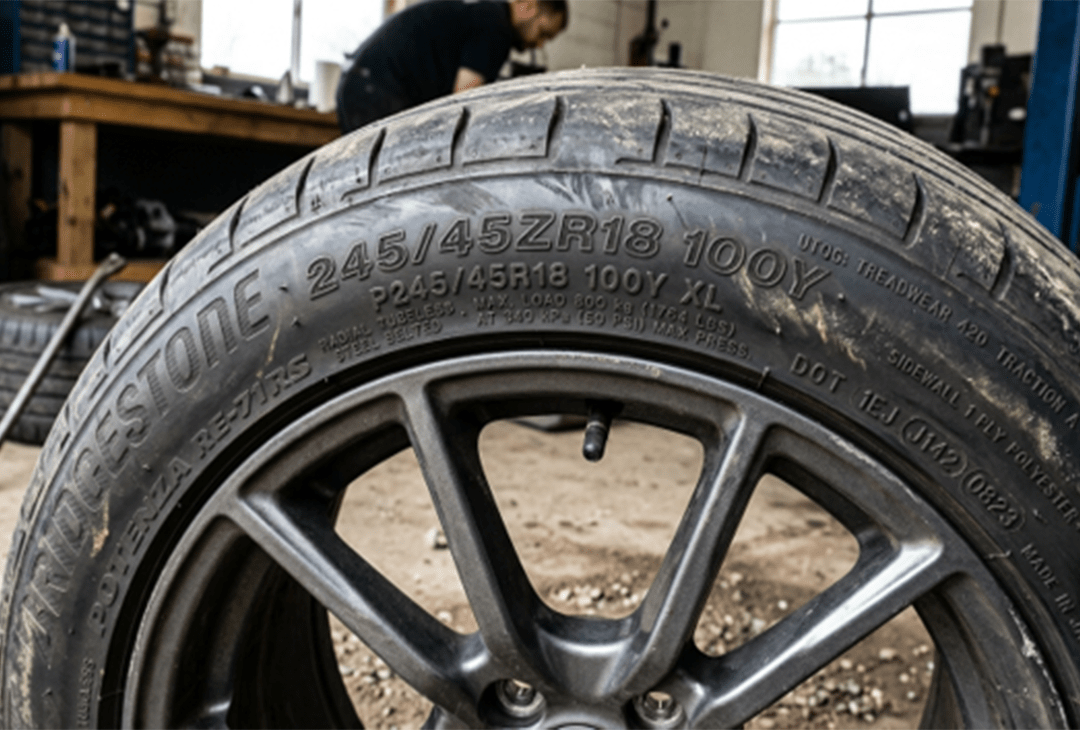
Every tire sold in the United States comes with a standardized set of markings on the sidewall. These tire codes provide important information about the tire’s size, construction, load capacity, speed capability, manufacturing date, and intended use.
Learning how to read tire codes can help you choose the right replacement tire, verify compatibility with your vehicle, and avoid purchasing old tires that may no longer be safe to use.
Interesting Read: Best Tire Manufacturers in 2026
Tire Codes Explained
The first letter in a tire size tells you what type of vehicle the tire was designed for.
P-Metric Tires
The “P” in P215/65R15 stands for Passenger vehicle. These tires are designed for sedans, minivans, SUVs, and crossovers used primarily for everyday driving.
LT Tires
“LT” stands for Light Truck. These tires are built with stronger internal construction to support heavier loads and are commonly found on pickup trucks, commercial vans, and vehicles used for towing.
ST Tires
“ST” stands for Special Trailer. These tires are designed specifically for trailers and should never be installed on passenger vehicles.
Euro-Metric Tires
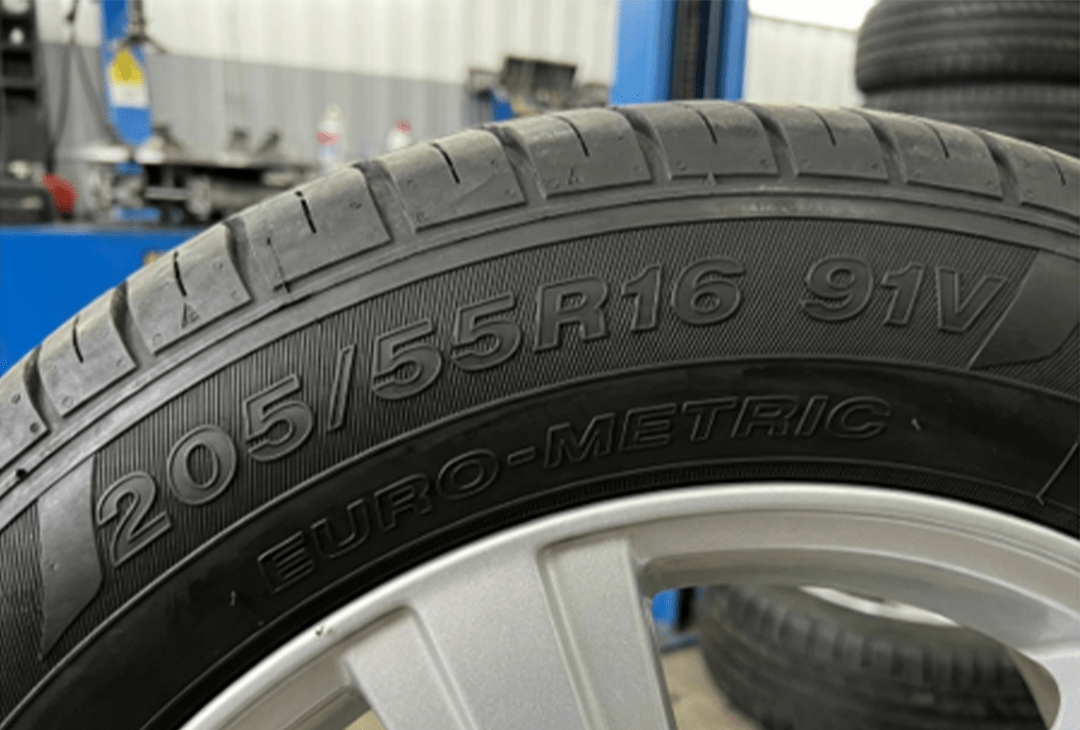
If there is no letter before the width measurement, the tire follows a European sizing standard. While similar to P-metric tires, load capacities may differ slightly.
Understanding Aspect Ratio
Many drivers overlook the aspect ratio, but it has a major impact on ride quality and handling.
For example:
- 215/65R15 = taller sidewall
- 215/45R17 = shorter sidewall
A higher aspect ratio generally provides:
- A smoother ride
- Better absorption of road imperfections
- More protection against pothole damage
A lower aspect ratio generally provides:
- Sharper steering response
- Improved cornering performance
- A sportier appearance
The tradeoff is a firmer ride and increased risk of wheel damage when hitting potholes.
Tire Load Index Chart
When reviewing tire rating codes, the load index is one of the most important numbers to understand.
| Load Index | Maximum Load Per Tire |
| 91 | 1,356 lbs |
| 94 | 1,477 lbs |
| 95 | 1,521 lbs |
| 98 | 1,653 lbs |
| 100 | 1,764 lbs |
| 105 | 2,039 lbs |
Remember that this rating applies to each tire individually. The total load capacity of your vehicle is determined by all four tires working together.
Tire Speed Rating Codes Explained

Speed ratings indicate the maximum speed a tire can safely sustain under proper conditions.
| Rating | Maximum Speed |
| S | 112 mph |
| T | 118 mph |
| H | 130 mph |
| V | 149 mph |
| W | 168 mph |
| Y | 186 mph |
Although most drivers never approach these speeds, speed ratings also reflect factors such as heat resistance, handling performance, and overall tire construction.
Additional Tire Sidewall Markings
When learning how to read tire codes, you may notice several other markings beyond the size code.
M+S
This stands for Mud and Snow. It indicates the tire meets minimum requirements for traction in light winter conditions.
Three-Peak Mountain Snowflake (3PMSF)
This symbol identifies tires that have passed industry testing for severe snow performance and are generally more capable in winter weather than standard M+S tires.
XL or Extra Load
An XL marking means the tire can carry more weight than a standard tire of the same size due to higher inflation pressure capability.
Run-Flat
Run-flat tires can continue operating for a limited distance after a puncture, allowing drivers to reach a repair facility without immediately changing the tire.
Reading Tire Date Codes
One of the most important tire rating codes is actually the tire’s manufacturing date.
Look for the DOT (Department of Transportation) code on the tire sidewall. The final four digits indicate when the tire was manufactured.
Examples:
- 2422 = 24th week of 2022
- 0824 = 8th week of 2024
- 4525 = 45th week of 2025
When buying new tires, it’s generally a good idea to verify that they were manufactured recently rather than sitting in storage for several years.
Even if a tire has never been driven, rubber naturally deteriorates due to age, exposure to oxygen, temperature changes, and UV light.
The UTQG (Uniform Tire Quality Grading)
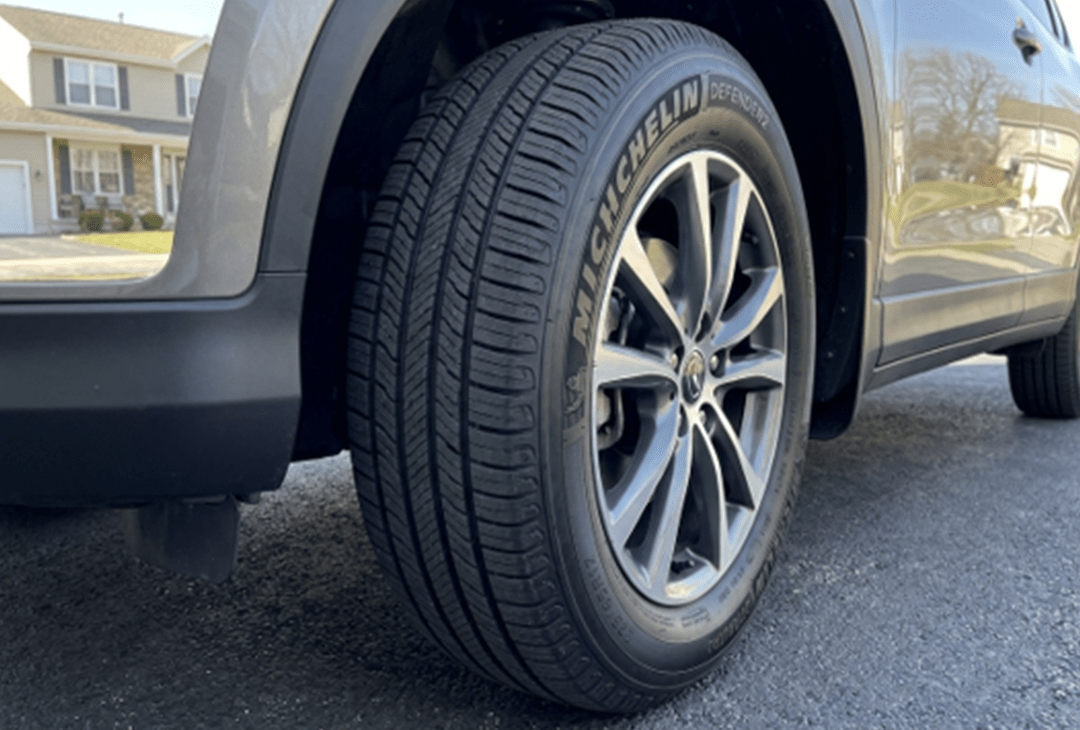
The U.S. government requires manufacturers to grade their tires across these three categories to help buyers compare performance, safety, and lifespan.
You will usually find them printed directly on the sidewall, clearly labeled as TREADWEAR, TRACTION, and TEMPERATURE.
Those three ratings make up the UTQG (Uniform Tire Quality Grading) system.
1. Treadwear (The Lifespan Estimate)
The Treadwear grade is a comparative rating based on the tire’s wear rate when tested under controlled conditions on a specific government test track.
- How it works: The baseline standard is a grade of 100.
- Reading the number: A tire graded 200 would last twice as long on the government test course as a tire graded 100. A tire graded 600 would last six times as long.
- The Catch: Manufacturers do the testing themselves, so it is best used to compare tires within the same brand. A 500-grade tire from Brand A might not wear exactly the same as a 500-grade tire from Brand B, but it will definitely last longer than a 300-grade tire from Brand A.
2. Traction (Wet Braking Grip)
The Traction grade measures the tire’s ability to stop a car on wet asphalt and concrete. It is measured in a straight line and does not indicate how well a tire corners on wet roads.
Grades are assigned from highest to lowest:
| Grade | What It Means |
| AA | Outstanding wet braking performance (best available). |
| A | Excellent performance, standard for most high-quality all-season and performance tires. |
| B | Competent, mid-range performance. |
| C | Acceptable performance, the bare minimum required by law. |
3. Temperature (Heat Resistance)
Tires generate massive amounts of heat at high speeds. If a tire gets too hot, it can trigger a sudden blowout or cause the rubber to degrade prematurely. The Temperature grade measures how well the tire dissipates heat and resists thermal buildup.
Like the traction rating, it uses a letter grade based on testing at specific laboratory speeds:
- A: The highest rating. The tire can safely dissipate heat at speeds over 115 mph.
- B: The tire safely handles heat between 100 mph and 115 mph.
- C: The tire meets the minimum federal safety standards (handles heat between 85 mph and 100 mph). All legal highway tires must score at least a C.
The Performance Trade-Off: High-performance tires (built for sports cars) usually have massive grip (Traction AA and Temperature A), but because the rubber compound is soft and sticky, their Treadwear numbers are often quite low (around 200–300). Conversely, long-lasting commuter tires might boast a Treadwear 700 rating, but will usually drop to a Traction A or B.
Why Tire Codes Matter
Understanding tire codes helps you:
- Purchase the correct replacement tires.
- Confirm your tires meet your vehicle manufacturer’s specifications.
- Verify load and speed ratings.
- Identify the age of a tire before purchase.
- Avoid safety issues caused by incorrect tire sizing.
If you’re ever unsure which tire size your vehicle requires, check the driver’s side door jamb sticker or consult your owner’s manual before purchasing new tires.